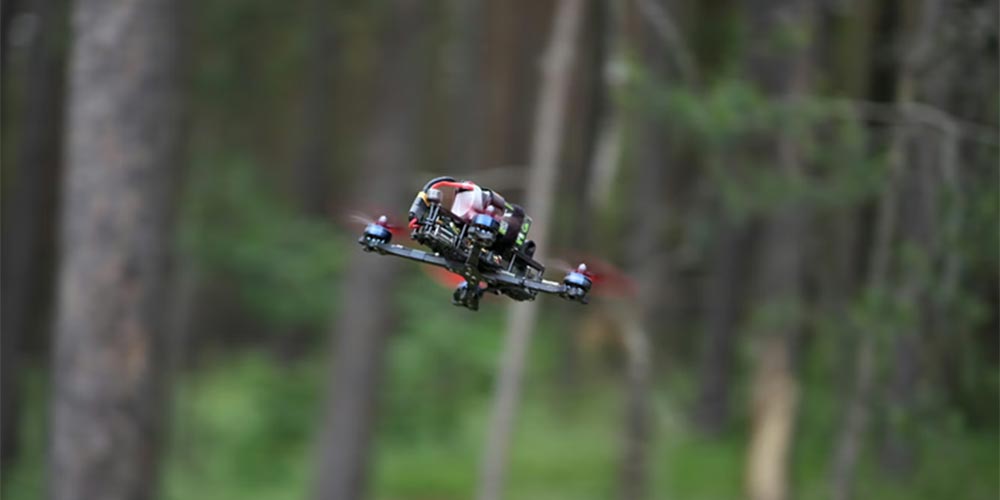
Precision in FPV drone strikes depends on a combination of operator skill, signal quality, environmental conditions, and increasingly onboard guidance technology. The gap in hit rates between fully manual and guidance-assisted FPV systems https://skycraftua.com/en/product/fpv-drones-with-guidance-system/ has become one of the most closely watched metrics in modern drone development. This article examines what the available data shows, explains how semi-autonomous terminal guidance actually functions, and outlines the factors that drive measurable improvements in strike accuracy.
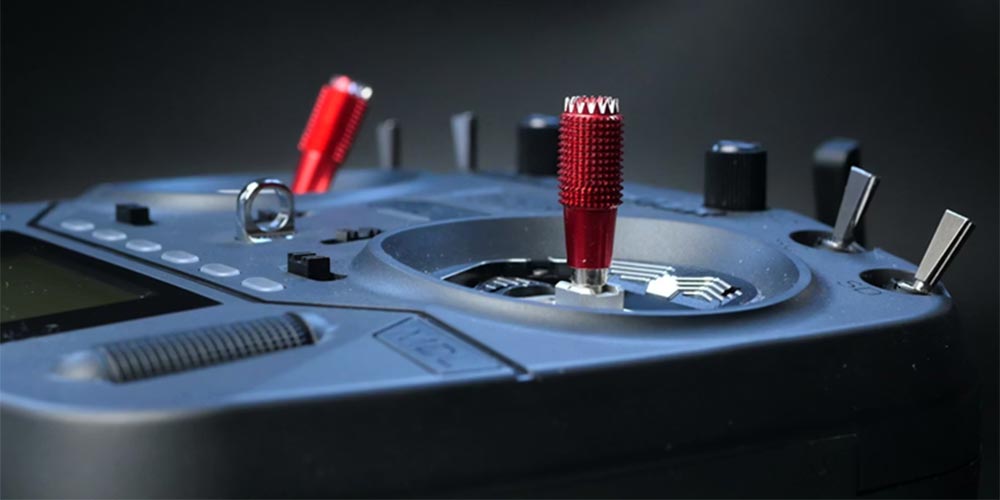
Why Manual FPV Strikes Have an Inherent Accuracy CeilingFully manual FPV operation places the entire targeting burden on the operator. During the terminal phase - the final 1-3 seconds of approach — the drone travels at speeds that can exceed 100 km/h. At that velocity, even a trained pilot faces significant challenges maintaining precise aim. Several factors compound the difficulty of manual terminal guidance: - signal latency between the drone's camera and the operator's goggles, typically 20-60 ms in digital systems;
- control input lag introduced by the flight controller's processing and motor response time;
- target obscuration caused by dust, smoke, or debris in the final approach corridor;
- operator fatigue and stress response, which increases micro-input errors under time pressure.
These constraints are not eliminated by training alone - they are physical and physiological limits that affect even experienced pilots under field conditions. How Terminal-Phase Guidance Improves Strike AccuracySemi-autonomous guidance systems do not replace the operator. The pilot retains full control from launch through the majority of the flight, directing the drone toward the target using live video and standard radio inputs. The automated guidance layer activates only in the terminal phase, using computer vision algorithms to detect the designated target and apply fine corrective adjustments in the final seconds of approach. Human judgment governs target identification and engagement decisions. The machine vision layer handles trajectory correction at the point where human motor control reaches its physical limits. The algorithm does not decide - it executes the operator's decision with a precision that human reflexes cannot reliably achieve at terminal approach speeds. Independent assessments from conflict analysts and manufacturer testing suggest that guidance-assisted systems achieve notably higher first-strike accuracy rates compared to fully manual approaches under equivalent field conditions. Factors That Determine Guidance System EffectivenessNot all semi-autonomous systems perform equally. Hardware quality, detection model training, and the integration between the vision pipeline and flight controller all influence real-world outcomes. The primary variables affecting guidance accuracy include: - camera sensor type - global shutter sensors eliminate motion blur artefacts that degrade neural network inference;
- inference speed - the model must produce corrective outputs at frame rates sufficient to act on them before impact;
- target detection confidence - well-trained models maintain lock on partially obscured or camouflaged targets;
- flight controller responsiveness - corrections are only as effective as the controller's ability to implement them in time.
Platforms developed by SkyCraft address these variables through integrated hardware and software design, validating the vision pipeline, compute module, and flight controller as a unified system. Comparing Manual and Guidance-Assisted Systems Across ConditionsCondition | Fully Manual | Guidance-Assisted | Clear visibility, stationary target | High accuracy | High accuracy | Reduced visibility (smoke, dust) | Significantly degraded | Moderately degraded | Moving or partially obscured target | Highly variable | More consistent | High operator fatigue | Noticeably degraded | Less affected | Electronic countermeasures active | Dependent on link quality | Terminal phase unaffected |
The pattern is consistent: manual systems perform well under ideal conditions, while guidance-assisted platforms maintain more reliable accuracy as conditions deteriorate. The advantage of machine vision correction is most pronounced when human control is under the greatest stress. Semi-autonomous terminal guidance is not a replacement for skilled FPV operators, it is a precision layer that performs reliably where human capability reaches its limits.
|  RSS Feed