|
Dubai, 16 January, 2014: The GCC pavilions at Global Village this season are delivering a highly varied slice of true Arabian hospitality, while informing, educating and entertaining about the region's most-loved food, beverages, textiles, jewellery and more.
Each country in the GCC region embodies its own distinctive style, reflected in the topography, architecture, cuisine, national dress and hospitality and this is reflected at their pavilions at this year's Global Village. The 18th edition of Global Village brings the GCC together at one destination with an eclectic mix of traditional and modern art and craft. Reflecting of the social and cultural mores of the region, visitors can expect to be dazzled as they sample flavours of local entertainment, art, crafts and culture at each of these six pavilions. KSA Pavilion
The Saudi tradition of showering guests with hospitality is evident as you enter their pavilion to be met by towering mounds of luscious dates and the fragrance of oud wafts down the aisles as stall owners beckon visitors to sample some of the country's finest dates, perfumes and coffee. Saudi Arabia is noted for its rich culture and tradition spanning centuries and the pavilion at Global Village takes visitors through some of the country's most fascinating aspects including the fact that the nation is home to over 1000 varieties of dates, several of which are available for purchase at the KSA Pavilion. The ‘ajwa' variety of dates is among the most popular and the most expensive. The dates contain minimal amounts of sugar and are known to have been recommended by the Prophet himself. Ajwa dates are among the most widely exported dates from Saudi Arabia.
Some of the other items on sale at the Pavilion include lacquer jewellery, ornamental goods, well known Musk rose and other perfumes, traditional garments and ‘Zamzam' water which is regarded as ‘Holy water' since it is found in the Well of Zamzam in Saudi Arabia, it has been proven that the water contains curative properties. Bahrain Pavilion
The extensive spice markets within the pavilion have avid chefs looking for just the right spice to bring their dish together. A majority of the spices sold are used when making the food and pre-mixes are also available to allow interested buyers to cook the perfect falafel or a prawn masala. The Bahraini Pavilion also features a resident spray gun artist, who will do live portraits just next to the pavilion stage. The artist is able to create wonderful portraits of people who have just walked into the pavilion. Oman Pavilion
The Omani pavilion is steeped in the rich culture of Islam and regional traditions, embodying the old and the new culture of this centuries old nation that is reflected in the country's architecture and way of life. The Omani pavilion has a lot to offer visitors with stalls selling traditional Youllah canes called ‘assa', as well as the traditional ‘muzzar' turbans. Visitors can also pick up decorative daggers – known as khanjars – which Omani men traditionally use to show they've come of age. Visitors to the Omani pavilion should sample Halwa Omani, a sweet that is traditionally served before drinking coffee or tea. Omani Halwa is quite popular in the Asian market, and a sizeable quantity is exported overseas every year. Kuwait Pavilion
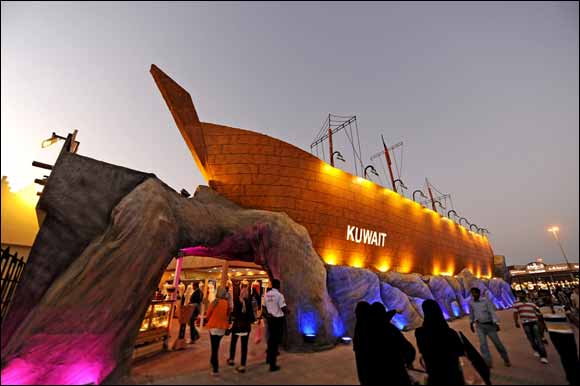
The Kuwait pavilion façade is creatively designed as a large dhow – a testimony to the seafaring traditions of the nation and its long tradition for peal diving. The aromas wafting out of the pavilion are enough to grab visitors' attention. Kuwait is a great pavilion to visit for the fashion conscious as there are many stalls carrying the latest in Arabic fashion. Colourful, sequined dresses adorn shop fronts and high quality abayas are found on display throughout the pavilion. Kuwait also has a wide selection of beautiful fashion jewelry on offer. Qatar Pavilion
The Qatar pavilion goes out of its way to showcase some of the most notable aspects of Arabian tradition. The very modern looking pavilion is littered with stores selling jewelry, frankincense, designer abayas, aromatic oils and perfumes. It brings to mind the ubiquitous souks of Qatar, well known to visitors who may have travelled to the country before. The pavilion is also promoting the nation's planned hosting of the 2022 FIFA World Cup while sharing information about its heritage. Yemen Pavilion
The Yemeni pavilion has become renowned for the quality of its honey. Visitors who talk with the knowledgeable vendors will find out that the honey being sold is remarkably good for your health. The quality, taste, and colour of the honey can all change just depending on the weather, time of year, and the type of flower that has been used by bees to make the honey. The Yemeni pavilion has a large amount of jewelry, decorated with precious stones and pearls. The vendors prove themselves to be fonts of knowledge and offering in-depth information on the antique rings and bejeweled necklaces. Agate stones and Onyx are set in to some pieces, with the beautiful colours of these stones standing out against the copper and silver pieces.
|  RSS Feed