
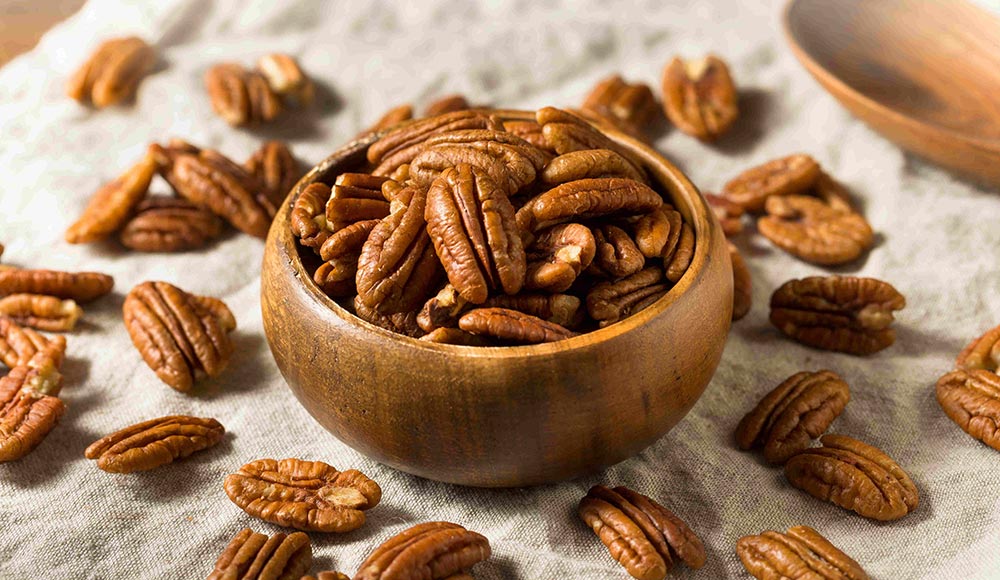
Dubai, July 2, 2024: As rates of cardiovascular disease, diabetes, and other lifestyle-related health concerns continue to rise, consumers are increasingly seeking foods that offer both nutritional value and everyday enjoyment. Among the options gaining attention are pecans, a nutrient-dense tree nut. Multiple scientific research reveals that regular consumption of pecans gradually improves heart health, metabolic wellness, and healthy ageing.
Rich, satisfying, and often described as indulgent, pecans stand out as a rare example of a food that delivers on taste while aligning with the kind of nutritional profile a cardiologist might recommend.
According to American Pecans, a single serving of American pecans - one ounce, or approximately 19 halves - contains 20 grams of total fat, 18 of which are unsaturated. Of those 18 grams, 12 are monounsaturated fat, the same class found predominantly in olive oil.
“There are zero grams of cholesterol and zero grams of sodium. There are just four grams of carbohydrate - placing American pecans among the lowest-carb of all tree nuts - and three grams of dietary fibre, among the highest of any tree nut. The serving also delivers three grams of plant-based protein, along with 60 percent of the daily value of manganese, 40 percent of copper, and 10 percent of zinc, as well as thiamin, beta-carotene, and a relatively uncommon form of Vitamin E - gamma-tocopherol.”
Ms. Sumit Saran, a senior official at American Pecans in the UAE, says that people in the UAE are increasingly health-literate. They read labels, they ask questions, they understand the difference between good fats and bad fats. When you show them the American pecan's profile - Heart-Check certified, among the lowest in carbs, among the highest in fibre of all tree nuts - the conversation becomes very easy.
The research behind these credentials is substantial. A 30-year observational study involving more than 76,000 female nurses and 42,000 male health professionals found that participants who consumed a one-ounce serving of nuts seven or more times per week had a hazard ratio for death 20 percent lower than those who ate no nuts. Those consuming nuts five or more times per week had a 29 percent lower hazard ratio for death from heart disease.
A randomised parallel pecan-specific study at New Mexico State University found that participants consuming approximately 68 grams of American pecans daily for eight weeks achieved a 10 percent reduction in LDL cholesterol by week four.
A study published in the Journal of Nutrition in 2001 found that a pecan-enriched diet achieved a 6.7 percent reduction in total cholesterol, a 10.4 percent reduction in LDL cholesterol, an 11.1 percent reduction in triglycerides, and a 5.6 percent increase in HDL cholesterol - all without any change in body weight.
A 2018 randomised, placebo-controlled feeding trial at Tufts University found that a daily intake of approximately 1.5 ounces of American pecans produced statistically significant improvements in insulin, insulin resistance, and pancreatic beta cell function among overweight and obese adults.
Beyond the clinical research, the pecan's nutritional breadth makes it compatible with an unusually wide range of dietary patterns. It fits naturally into Mediterranean, gluten-free, high-fibre, plant-based, and low-carbohydrate approaches.
The 2020–2025 Dietary Guidelines for Americans explicitly recommends five servings of nuts, seeds, or soy products per week for those following a Mediterranean-style diet - a pattern increasingly adopted by health-conscious UAE consumers.
All of this nutrition sits inside a nut that tastes of warm butter and brown sugar. That combination - genuine indulgence and genuine nutritional integrity - is rarer than it might appear, and it may be the most honest summary of what the American pecan actually offers.
Raw American pecans carry the heart-check certification of the American Heart Association, awarded only to foods that meet strict criteria for sodium, fat, and overall nutritional composition. The US Food and Drug Administration has also issued a qualified health claim: scientific evidence suggests, though does not prove, that eating 1.5 ounces per day of most nuts, including American pecans, as part of a diet low in saturated fat and cholesterol, may reduce the risk of heart disease.