|
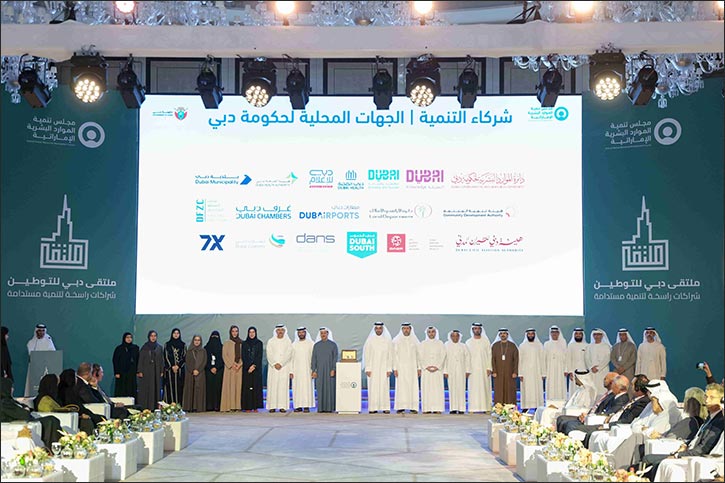
Dubai, 06 Feb 2026: The Emirati Human Resources Development Council (EHRDC) launched a first-of-its-kind ‘Dubai Ambition’ Initiative, on the sidelines of the Dubai Emiratisation Forum, organised under the theme ‘Solid Partnerships for Sustainable Development’. The initiative is designed to nurture national talents and enhance their skills and capabilities. The launch was held along with representatives from government entities, private-sector companies and educational institutions, as well as a distinguished group of leaders and experts. The initiative marks a landmark milestone in ongoing efforts to advance human capital empowerment and Emiratisation objectives across Dubai. The ‘Dubai Ambition’ initiative seeks to empower Emirati students and graduates, prepare them for the labour market and expand private-sector employment through an integrated framework that brings government entities, educational institutions, and private-sector companies under a unified ecosystem. This is crucial to advancing human capital development in line with Dubai’s sustainable development goals. His Excellency Sultan bin Saeed Al Mansoori, Chairman of the EHRDC, highlighted that the initiative’s launch reflects the Council’s long-standing vision to build integrated pathways that begin with early awareness, progress to high-quality practical training and culminate with the trainees securing sustainable employment opportunities in the private sector. This further demonstrates the Council’s commitment to leveraging best-in-class tools and resources to empower national talents through strategic initiatives based on partnership and integration. H.E also stated: “At EHRDC, we believe that strategic partnerships are the key to realising our goals and nurturing capable national talents who can keep pace with economic transformations, while contributing to strengthening Dubai’s competitiveness and knowledge-based economy. We believe that this launch marks a significant achievement in advancing Dubai’s Emiratisation ecosystem, enhancing human development objectives and establishing a sustainable model of cooperation between the public and private sectors.” The initiative carries an ambitious vision to realise a set of integrated targets by 2026. These include raising awareness among 10,000 Emirati students, providing practical training opportunities to 10,000 Emirati students and graduates within private-sector institutions and facilitating the employment of 5,000 Emirati citizens within the private sector. These targets will contribute to the creation of clear and sustainable career pathways that enhance alignment between educational outcomes and labour-market requirements. The initiative was launched with the participation of 20 entities representing diverse sectors across the Emirate, including the Emirates Institute of Finance, Dubai Land Department, Emirates Global Aluminium, Abdulla Al Ghurair Foundation for Education, Etisalat, du, Emirates NBD, Emirates, flydubai, Dubai Duty Free, KPMG, Azizi Group, Keolis, Abdul Wahid Al Rostamani, Al Rostamani Group, Al-Futtaim Group, Majid Al Futtaim Group, Chalhoub Group and the Easa Saleh Al Gurg Group. This reflects the scope and diversity of the institutional partnership base as well as their commitment to supporting Emiratisation and human development objectives. Moreover, this venture lays down a clear and practical approach to realising the objectives of the ‘Dubai Economic Agenda’ (D33) and ‘UAE Centennial 2071’ vision, positioning people as the cornerstone of economic and social development. It also marks a shift from isolated initiatives towards a collaborative work system that prioritises practical training and quality employment. The Dubai Emiratisation Forum served as a comprehensive and inclusive platform for partners of Dubai’s Emiratisation ecosystem as well as other visitors to exchange insights, ideas and expertise. The forum highlighted the importance of collaboration and integration between educational institutions and employers, as well as the need to align training programmes with labour-market requirements. This will help enhance student and graduate readiness, supporting the development of a resilient national workforce capable of adapting to rapid changes.
|
 RSS Feed