|
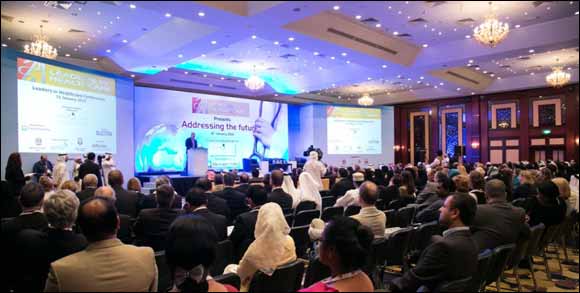
Industry leaders at Arab Health 2014 to review delivery of healthcare services in the Middle East Dubai, UAE: Although science and technology will undoubtedly play a significant role in enhancing and enabling better healthcare provision in the future, it will be equally important for countries in the Middle East to focus on improving the delivery of healthcare services and associated business processes such as the development of primary care and specialised care services. This issue will be debated at the Leaders in Healthcare Conference during the 39th Arab Health Exhibition & Congress from 27 -30 January 2014 at the Dubai International Convention & Exhibition Center. According to Professor Lord Darzi of Denham, Hamlyn Chair of Surgery, Director, Institute of Global Health Innovation, Imperial College London, UK, and speaker at the Leaders in Healthcare Conference, “The Middle East should move towards specialised care, but in parallel to developing effective primary care services which should form the basic foundation of a healthcare system. There is a need to build efficient and disease-specific models of prevention and specialised care that deliver quality outcomes in the most cost-effective way possible. One example of this is Qatar's National Cancer Strategy. This looks at all aspects of cancer prevention and management drawing on robust international evidence, and is reshaping the treatment and support patients receive. The Middle East is also increasingly attracting international academic and clinical research talent and emerging as a location for biomedical research. We are starting to see this feed into the development of specialised care services and the creation of disease-specific research strategies.” Healthcare spend in the region is expected to reach $133.19bn in 2018 . Lord Darzi believes that regional investment opportunities include the development of regional specialist providers, enhanced primary care services, the development of regionally based capacity to manufacture pharmaceuticals and medical equipment, and the development of a regional talent pool to reduce the reliance on imported human capital. These are all growth areas in the region's healthcare sector. Commenting on this growth trajectory, Steven J. Thompson, Senior Vice President, Johns Hopkins Medicine and CEO, Johns Hopkins Medicine International says, “Over the past decade Johns Hopkins Medicine has engaged in a number of exciting and highly successful health care collaborations in the Middle East. Many government agencies and leading companies in the region have placed a high priority on increasing the accessibility, quality and safety of health care delivery, as well as on adding advanced specialty care. More hospitals in the Middle East are becoming world class institutions, and that trend seems only to be accelerating.”
Science and technology will play a significant role in enhancing and enabling better healthcare provision in the future and managing spiraling healthcare costs.
“For example, we are already seeing the impact that smartphones and digital applications are having as a cost effective and patient targeted method of managing chronic diseases like diabetes. These will change the landscape of primary and community care delivery over the next decade. Personalised medicine will revolutionise healthcare by allowing for the tailoring of treatments to each patient. Gone will be the days of trial and error; prescribing courses of treatment that do not work. Through a combination of genomic information, tissue imaging data and clinical outcomes, we will know what will work for a particular patient with a certain genomic profile,” says Lord Darzi.
|  RSS Feed