Dubai, 15 October 2026: Dubai Future Foundation (DFF), through the UAE Centre for the Fourth Industrial Revolution (UAE C4IR) today launched "Fourth Industrial Revolution in the UAE: 100 Use Cases", a new report documenting 100 applications of advanced technology across the UAE economy, public sector and academic institutions.
The UAE's Fourth Industrial Revolution transformation is no longer a policy ambition. It is deployed capability. At Emirates Global Aluminium, more than 100 artificial intelligence and data applications have generated USD 123 million in financial impact since 2021, and in January 2025 the World Economic Forum designated its Al Taweelah smelter a Global Lighthouse, the first industrial company in the UAE to receive that recognition. At ADNOC Gas, wall-climbing robots built by Gecko Robotics measure corrosion inside pressure equipment, nearly doubling the area inspected compared with manual methods and feeding the readings into an AI platform that estimates where and when repairs will be needed. Dubai Police has put a driverless patrol vehicle, designed and built in the UAE by Micropolis Robotics, into live service at Global Village, part of an autonomous policing capability that Dubai Police is extending across land, air and sea. And robotic surgical platforms are in use at hospitals across Dubai, Abu Dhabi and Sharjah, with American Hospital Dubai and Sheikh Shakhbout Medical City alone accounting for more than 4,000 procedures.
Together, the 100 use case span nine sectors: smart cities, manufacturing, energy, logistics, healthcare, agritech, fintech, space and creative industries. They also show what makes that deployment possible: government setting direction, regulation and demand, companies bringing technology and operating expertise, and universities and research institutes adding specialist knowledge. More that 60 of the 100 cases were built as public-private or wider cross-sector collaborations.
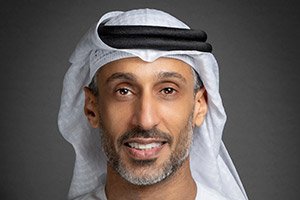
HE. Khalfan Juma Belhoul, CEO of DFF said: "The Fourth Industrial Revolution continues to be defined not by who has access to technology, but by who can turn it into real economic and social value. These 100 use cases show that transition taking place across the UAE. They demonstrate what becomes possible when government, industry, researchers and innovators work together to move advanced technologies from experimentation into practical use at scale."
Belhoul added: "The value of this report is more than documenting progress. It is in sharing what has worked, what it takes to deploy responsibly, and which approaches can be adapted elsewhere. We want the UAE's experience to contribute to a global conversation focused on implementation, impact and responsible scale."
Each use case was assessed against six criteria: relevance to the Fourth Industrial Revolution; significance to the UAE; maturity; measurable impact; replicability; and responsible deployment. The report looks beyond the technology itself to explain why the application matters, how it works, the impact achieved or expected, and what comes next.
The cases draw on 16 pre-defined technologies: artificial intelligence, the Internet of Things, blockchain, cloud computing, edge computing, cybersecurity, digital twins, quantum technologies, robotics, autonomous systems, additive manufacturing, drones, advanced materials, biotechnology, precision agriculture, and space data and Earth observation. The report finds that the strongest results come where several of these converge around a defined operational problem.
The publication is designed as a resource for governments, companies, regulators and researchers seeking practical models they can learn from and adapt. Rather than presenting a single formula, the 100 cases show the different combinations of policy, infrastructure, partnerships, skills and institutional capacity required to turn advanced technology into outcomes.
UAE C4IR was established in April 2019 as the first partner centre in the World Economic Forum's global Fourth Industrial Revolution network. Hosted by Dubai Future Foundation, it works as a public-private platform for technology governance, policy and responsible adoption, developing frameworks alongside government entities, companies and research institutions, and connecting UAE experience to the Forum's international network of centres. This report is a product of that work.